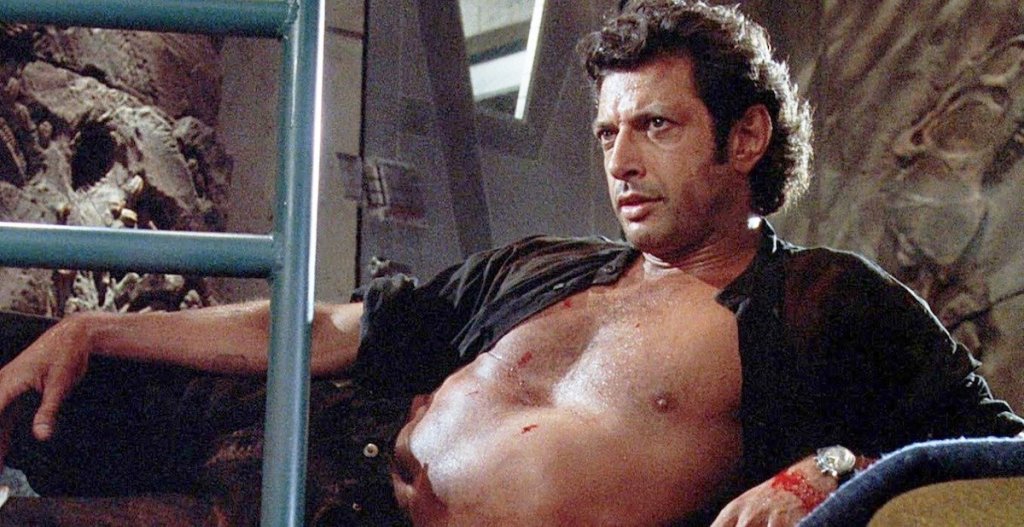
Recently, I was rewatching Jurassic Park (as one does).
This is not an unusual occurrence for me. That first Jurassic is one of my favorite films, with Spielberg firing on all cylinders, John Williams setting the orchestra ablaze, yadda yadda. Plus, there’s a new Jurassic World movie coming out later this year, and even though it can’t hope to measure up to the original in my mind, I’ll be in theaters opening weekend for that good good dino mayhem.
But what struck me this time was the scene where Ian Malcolm (played by Jeff Goldblum) explains chaos theory to Ellie Sattler (Laura Dern, iconic as always) while they tour the park. It’s a perfect bit of foreshadowing from both Michael Crichton’s novel and David Koepp’s screenplay for an audience who’s gearing up for the halfway point when things take a turn and the T. Rex starts snacking on lawyers, but it’s also kind of a perfect metaphor for the creative process.
And sure, there’s a lot of good acting and great comedic timing from everyone involved. It’s a great scene, even if a lot of people forget it because 10 seconds later there’s a freakin’ triceratops on screen and Laura Dern is up to her elbows in dino droppings. But that’s also how writers live in general.
Writers work on a pretty wide spectrum when it comes to planning. You’ll either hear of “plotters versus pantsers” or “architects versus gardeners” in this discourse. Brandon Sanderson is an example of the former (he outlines extensively beforehand so he knows more or less the scenes he’ll be writing each day, and while changes come up, the book tends to stay on the rails he’s laid out for it), and George R. R. Martin is an example of the latter (there’s a reason that 14 years on, The Winds of Winter have yet to blow, and it has everything to do with the balance of keeping Book 6 of a lengthy epic fantasy saga in line with Books 1-5 and on track for Book 7 while indulging in the spontaneity that keeps him writing. Those last seasons of Game of Thrones have fewer episodes because the writers only knew what he did: the signposts, not how to get from one to the next organically.). That’s not to say that “plotters” don’t leave room for characters to grow in unexpected ways, or that “pantsers” don’t have a clue where they’re going. It’s a spectrum, and nobody lives at either extreme.
Me, I’m closer to the Brandon Sanderson school of thought. I like to have the story pretty much in place before I put pen to paper (or fingers to keyboard, depending on how I feel like drafting on this particular manuscript). I first write about the characters and their individual goals, then draw up a bullet-pointed list of scenes I’d like to have in my book. I then flesh this out, finding the places where each scene should go and chiseling out the overall story. After that, I develop an even more detailed outline, complete with where I estimate each chapter break will be. Usually by this point, I’m familiar enough with my writing style that I can guess within 10-15,000 words how long the book will be.
Then, about halfway through the first draft, I revisit the outline and revise the back half to better fit the front half of the book. Each book teaches you how to write it, and I know better than to try to commit to EVERY idea I had when the book was a little baby outline. By this point in the drafting process, I’m feeling very calm and assured about everything.
Just as cool as a cucumber.
See, this is where chaos theory steps in. Man plans, and God laughs (or Godling laughs, in the case of Rapscallion). All the planning in the world won’t guarantee what a finished book will be. That’s not to say writing is some mystic, unknowable art! The only real trick to writing is just, y’know, doing it, putting words on a page day in and day out until the story you want to tell is down there, albeit in a capacity that you’ll find deeply embarrassing for the next 2-3 drafts.
It’s that… stuff happens. Incredible stuff. Frustrating stuff. Heartbreaking stuff. All manner of unforeseen stuff. It’s those microscopic imperfections in the skin that make the water drop slide a different way each time.
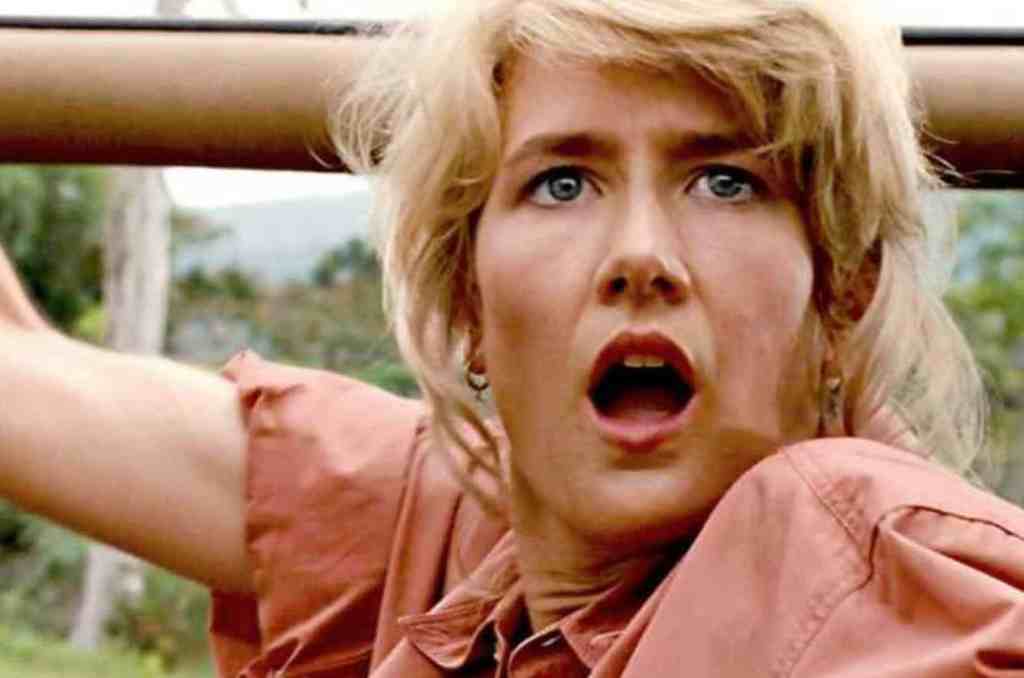
I said microscopic!
For example, last weekend I was working on the climax of a manuscript (no, it’s not Iconoclast, yes, I’m proud of it, no, you can’t read it until it goes through those 2-3 embarrassing drafts and a couple more rounds of polish after that). I’d felt like I was fighting this manuscript for a long time, but on Saturday, I was In The Zone. We’re talking a page every 15 minutes, and just bopping along, no second guessing. Finally, I could see the light at the end of the tunnel, and it wasn’t a train! I was in, I was excited, and I was–
My partner texted me. I’ll paraphrase: “Weren’t we going to get drinks about now with some friends?”
I replied, “You said you didn’t want to, and now I’m pretty deep in the climax, so I figure we’ll just stay in.” Then I set the phone down, trying to remember what my next sentence was going to be. Ah, right. Back to–
“Are you sure? Because it’s at this local speakeasy and I thought you’d want to go.”
I picked up the phone again. “I did want to go, but you said you were tired and wanted to skip it.”
“Oh, I was only saying that because I wasn’t sure you actually wanted to go. I could totally go.”
I looked at the manuscript. The next sentence was gone, and I knew I wouldn’t be able to get it back. I sighed and texted, “Gimme five minutes.”
Now, just to be clear, I don’t resent my partner for texting me! We’d just had a little breakdown in communications and after I took a few minutes to have my own little breakdown (RIP, that version of the scene), we were on our way. It was a great time. One of our friends there was actually in the middle of reading my book, which was a great morale booster, and the next day, I got right back into the climax and pushed through to the end.
But it’s not the same as it would have been if I’d kept writing in that moment. Every time I sit down to write, some sentences surprise me. Hopefully, it’s better than it would have been, since I came back refreshed. If nothing else, revisions will make sure it’s better in the long run. Regardless, there are thoughts I had while writing that Sunday that are different from where my head was at on Saturday. Even though I had the sequence outlined, those tiny changes add up. Frankly, this particular manuscript had more opportunities for chaos to take hold than most.
Then again, maybe that’s the secret. Maybe the truth about artists is that none of us know what we’re doing, and we write so we can pretend to control a small world in the midst of a larger one that seems to be spiraling ever further towards chaos by the day. Be honest, if you put some of our more recent headlines into a novel, would you believe them? Maybe I need to write to reassure myself that life, ah, finds a way, even in the most insane circumstances, or to accept those things I can’t control.
Or maybe I’m just a guy who likes Jurassic Park.


 Trey Weller
Leave a comment